More men are considering double eyelid surgery, but most share the same priority: they want to look more rested and alert without anyone noticing that something has been done. A crease that suits many women can look too wide, too curved or too decorative on a male face. Planning a subtle result for men involves a different approach to crease height, shape, skin handling and even recovery timing. Understanding these differences helps male patients describe their goals clearly and avoid an outcome that looks out of character.
What Men Usually Mean by "Subtle"
When men ask for a natural change, they typically want:
- Eyes that look less tired and less heavy, especially in photos
- A crease that is low and barely noticeable when the eyes are open
- No obvious change in expression or eye shape
- Results that colleagues and friends will not identify as surgery
Putting these goals into words at the start of the consultation helps the surgeon design conservatively from the beginning rather than toning down a feminine design later.
Crease Height and Shape for Male Faces
Male eyes are often framed by a lower, straighter brow and a flatter upper eyelid. A low crease, usually in the lower range of what is used for women, keeps the lid looking strong and understated. The shape is often a gently tapered or low in-out line that follows the eye without a dramatic outer flare. Wide parallel creases, especially those that sweep upward at the outer corner, can look soft or overly stylised on many men and are usually avoided unless specifically requested.
Handling Skin and Fat Conservatively
Men often have thicker skin and a fuller lid, but aggressive tissue removal is rarely desirable:
- Skin: only redundant skin is removed, keeping enough fullness for a masculine look.
- Fat: a small amount may be reduced if it prevents a clean fold, but hollowing is avoided because it can look aged.
- Muscle: trimming is kept minimal to preserve natural movement and expression.
The aim is to open the eye slightly rather than reshape it.
Checking for Ptosis and Brow Compensation
Many men who feel their eyes look tired actually have mild ptosis, where the upper lid sits a little low over the pupil, or a habit of raising the brows to keep the eyes open. Correcting a slightly low lid can create a more alert appearance than a crease alone, and it often allows the crease itself to stay very low. The surgeon also checks whether the brows drop once the eyelids are improved, because this can change how much skin rests on the lid after surgery.
Choosing a Technique
The technique depends on tissue thickness and goals:
- Buried-suture methods: can work for thin lids and a very subtle fold, with less downtime.
- Partial incision: suits moderately full lids that need limited fat adjustment.
- Full incision: often preferred for thicker skin, ptosis correction or long-term stability.
Men with thick, heavy lids sometimes find suture methods loosen sooner, so durability is weighed against recovery time.
Scars and Recovery for Men
Men may be less comfortable using makeup to cover bruising, so recovery planning matters. Incision lines are placed within the crease and usually fade well, but they can stay pink for a few months. Swelling typically peaks within the first few days and improves significantly by two weeks, although the crease will look higher than planned for several weeks. Many men schedule surgery before a holiday or a period of remote work so that early swelling is less noticeable to others.
A practical way to prepare is to collect a small set of clear photos of your eyes taken in natural light: looking straight ahead, looking down, with the eyes gently closed and while smiling. These images help the surgeon understand how your eyelids behave in everyday life, and they also give you a reliable baseline for comparing changes during recovery.
Avoiding a "Done" Look
Common features that make male eyelid surgery noticeable include:
- A crease that is too high or too curved
- Overly sharp definition with a deep groove
- Removal of too much skin or fat, causing hollowness
- An expression that looks surprised rather than relaxed
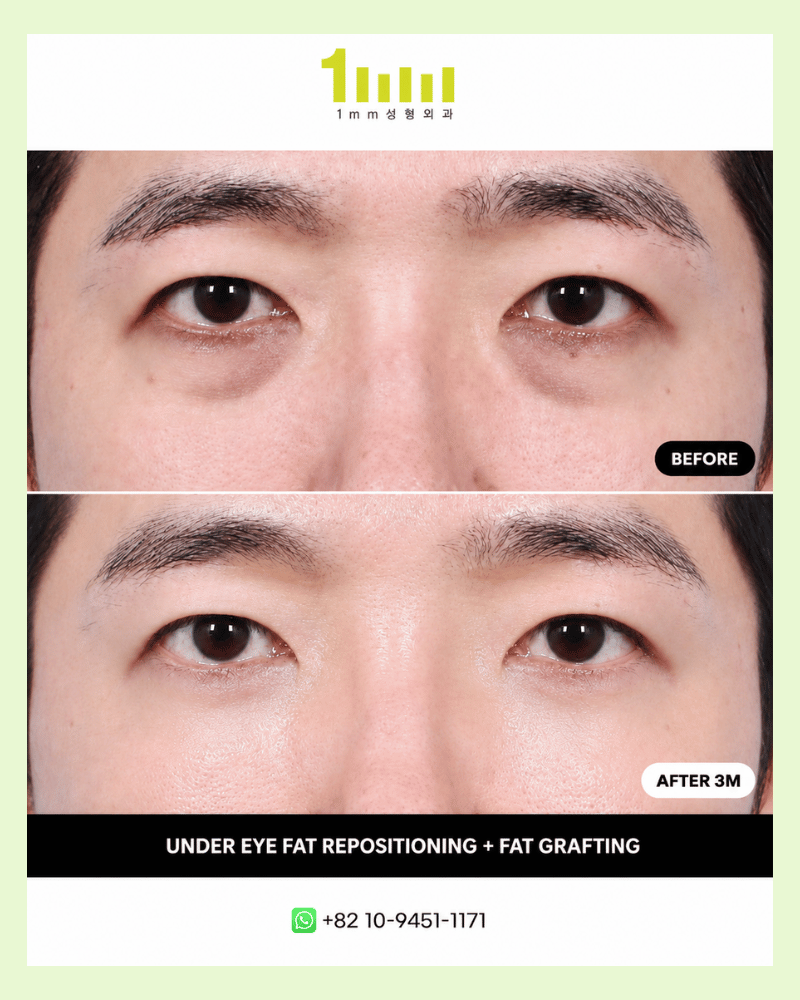
Choosing a surgeon who regularly treats male patients and reviewing before-and-after photos of men with similar features is one of the best ways to avoid these issues.
Questions to Ask at Your Consultation
Ask how low your crease can be while still creating a visible improvement, whether you have any degree of ptosis, and how much skin and fat will be removed. Ask to see a crease simulation and photos of male patients with similar anatomy.
- Men usually suit lower, straighter, more conservative creases.
- Correcting mild ptosis can be more effective than a higher crease.
- Tissue removal should be minimal to preserve a masculine lid.
- Plan recovery time around work and social commitments.
With careful planning, double eyelid surgery can make male eyes look fresher while keeping their natural character intact.
It is worth remembering that natural faces are never perfectly symmetrical and that healing follows its own pace. Good results come from careful assessment, conservative planning and patience during recovery. If anything about your eyes or your healing concerns you, the safest course is always to contact your surgeon or an eye specialist rather than relying on general information alone.