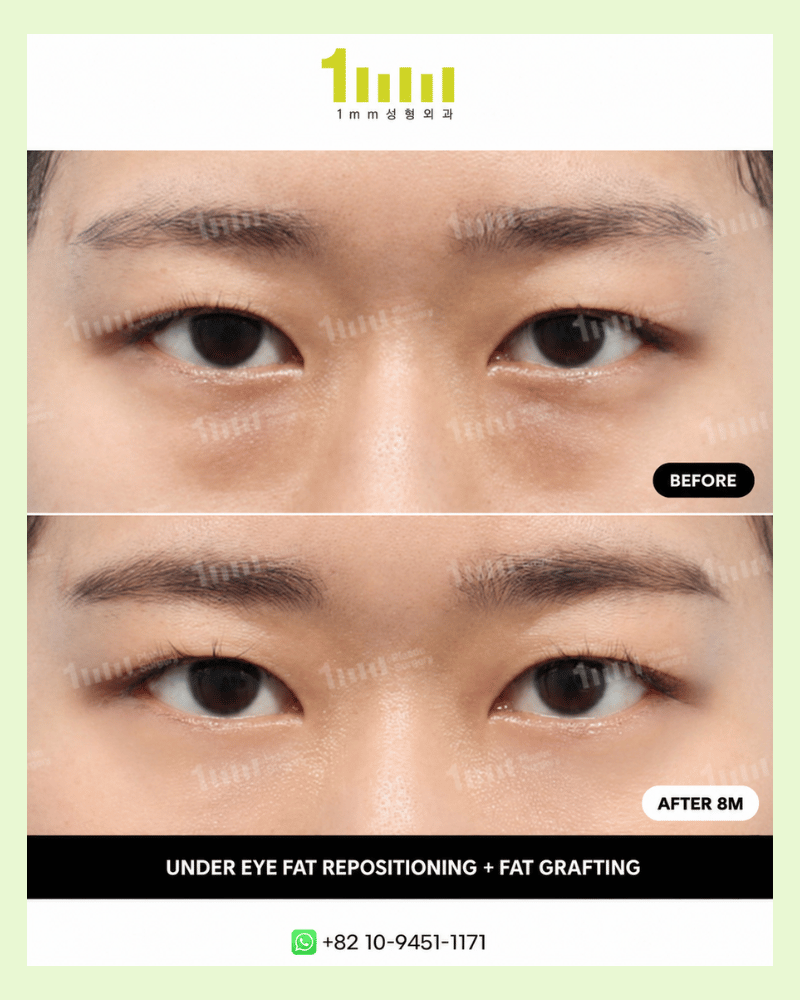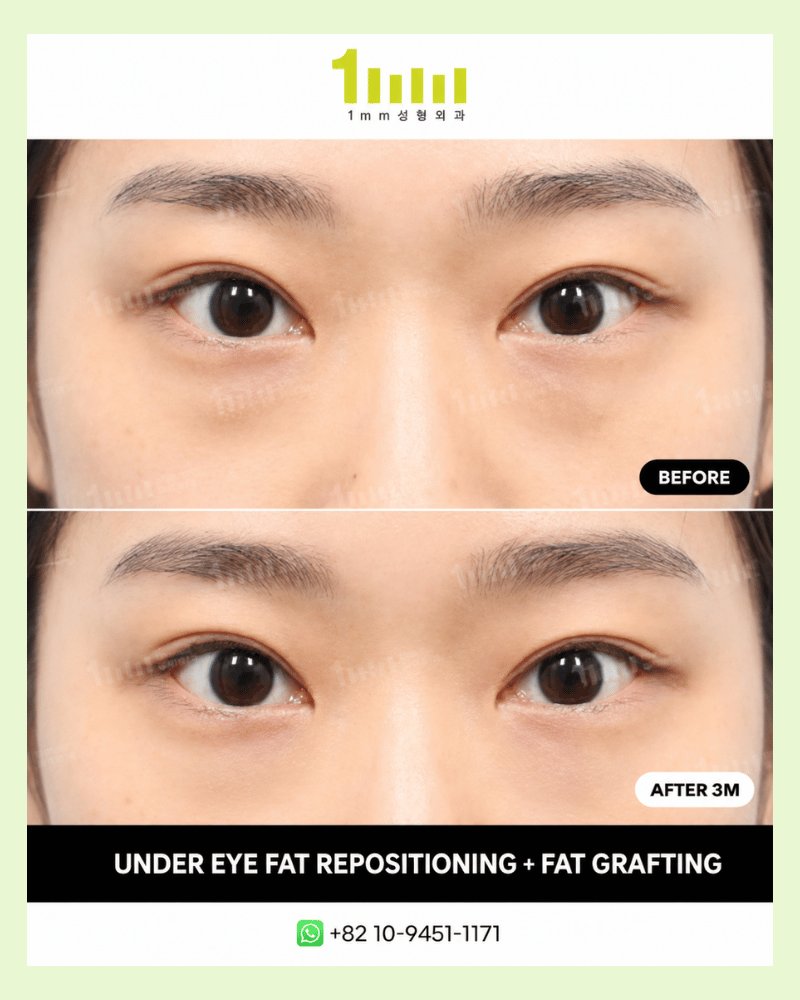
Under-Eye Fat Repositioning in Seoul, Korea
Gangnam 1mm Plastic Surgery
Why Choose an Eye-Specialized Clinic? (Plus Cost Estimates)
At a Glance
Concerns treated: Under-eye bags, tear trough hollows, tired-looking eyes, shadowing, uneven lower-lid contour, mild lower-lid skin laxity
Techniques: Transconjunctival fat repositioning, external incision fat repositioning, fat removal with redistribution, lower blepharoplasty with skin tightening, optional fat grafting
Anesthesia: Local with sedation (most); general anesthesia in select combined or complex cases
Time: ~60–120 minutes
Downtime: Stitches out ~5–7 days if an external incision is used; socially presentable ~7–14 days
Best for: Patients with under-eye bags and tear trough hollows caused by protruding orbital fat and volume imbalance—not just dark pigmentation
Why Korea — and Why an Eye-Specialized Clinic?
- Bag–hollow balance, not simple fat removal
Eye-specialized surgeons do not just remove protruding under-eye fat. They reposition it into the tear trough to smooth the transition between the lower eyelid and upper cheek, reducing both puffiness and hollow shadowing. - High-volume refinement
Korean periorbital surgeons routinely perform under-eye fat repositioning for younger and middle-aged patients, allowing precise correction of asymmetry, bulging fat compartments, tear trough depth, and lower-lid contour. - Structure-preserving, tailored choices
From scarless transconjunctival fat repositioning to external lower blepharoplasty with skin tightening, you receive the least invasive method that addresses the actual cause of your under-eye concerns. - Fly-in friendly
Clear English consultations, remote photo reviews, transparent quotes, printed aftercare, and travel planning around swelling, stitch removal, and follow-up appointments. - Value without cutting corners
Surgeon-led care, hospital-grade protocols, careful fat preservation, and meticulous lower-lid support—at competitive pricing compared with many international surgical destinations.
What Under-Eye Fat Repositioning Actually Does
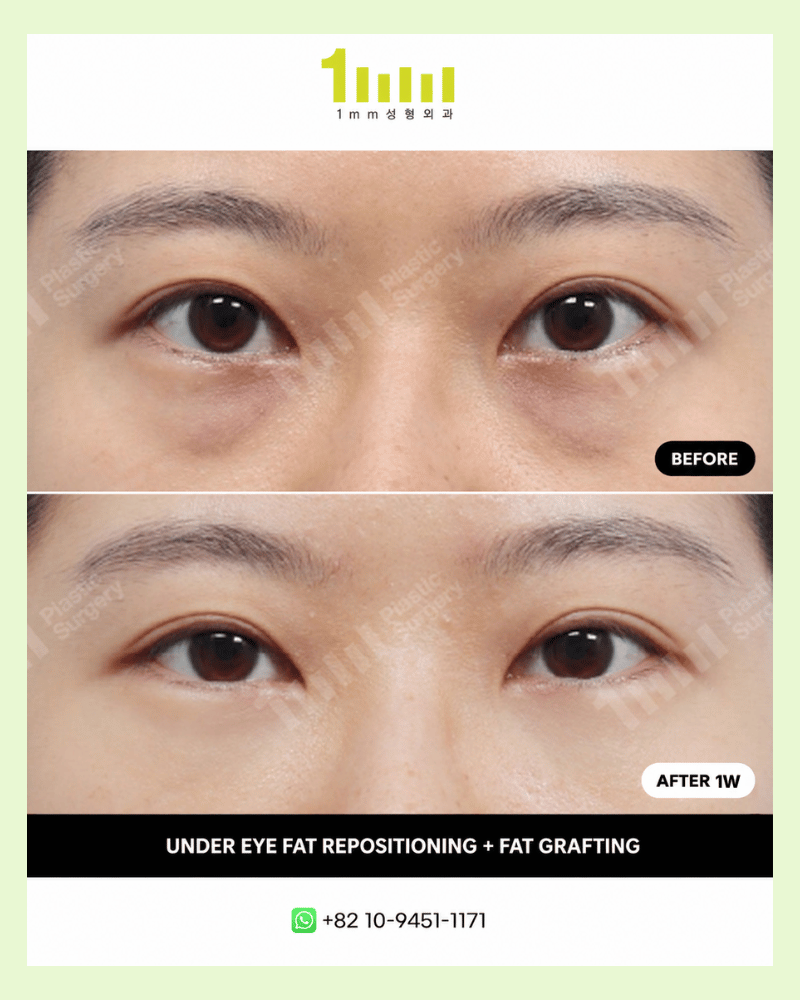
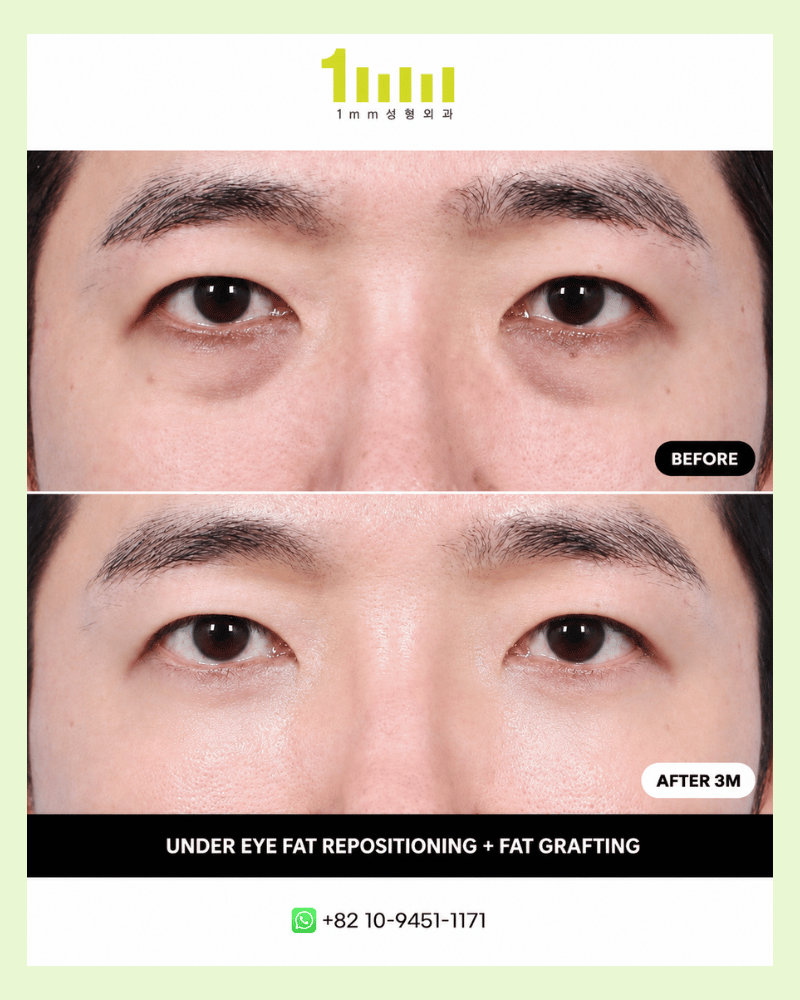
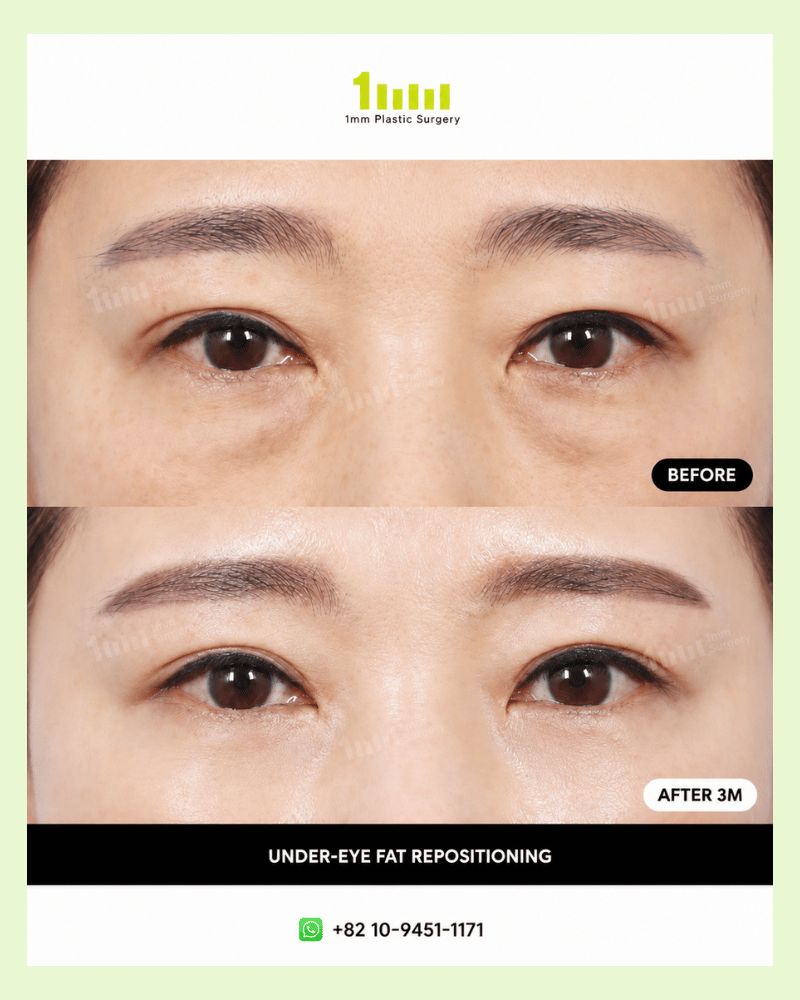
Releases the tear trough ligament and moves protruding orbital fat into the hollow area beneath the eyes.
Smooths the lid–cheek junction: The procedure creates a flatter, more continuous transition between the lower eyelid and upper cheek.
Reduces shadowing: Filling the tear trough with your own orbital fat can reduce the dark, tired appearance caused by contour shadows.
Preserves volume: Instead of aggressively removing fat, repositioning maintains support and reduces the risk of a hollow or skeletal appearance.
Balances asymmetry: Each fat compartment can be adjusted separately to improve uneven under-eye bags or tear trough depth.
Which Under-Eye Procedure Is Right for You?
Transconjunctival Fat Repositioning — scarless, most popular
An incision is made inside the lower eyelid. Protruding fat is released and repositioned into the tear trough. Best for younger patients with good skin elasticity and little excess skin.
External Fat Repositioning — better access with skin correction
A fine incision is placed just beneath the eyelashes. This allows the surgeon to reposition fat while also removing or tightening loose lower-lid skin. Best for patients with bags plus wrinkles or skin laxity.
Fat Removal with Repositioning — for larger bags
A conservative amount of excess fat may be removed while the remaining fat is redistributed into the hollow area. This is useful when the fat volume is too large to reposition evenly.
Lower Blepharoplasty with Skin Tightening — complete rejuvenation
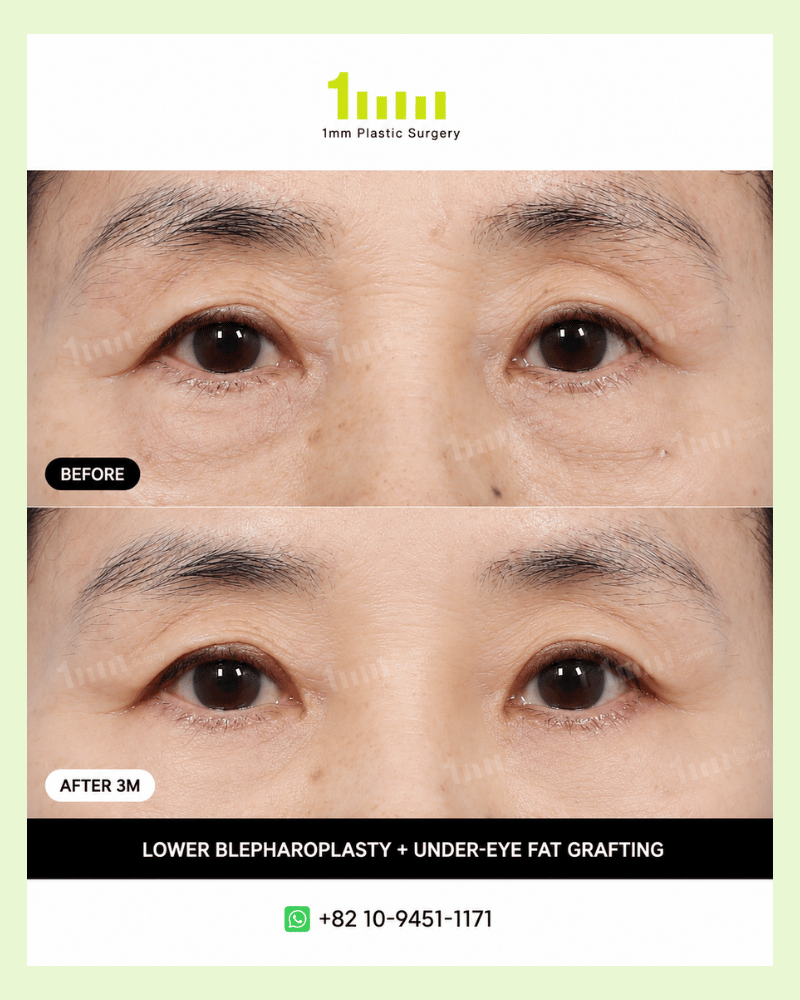
Combines fat repositioning with skin trimming and, when necessary, muscle or canthal support. Best for older patients with under-eye bags, loose skin, wrinkles, and lower-lid weakness.
Fat Grafting — additional volume support
Fat harvested from another area may be added to the tear trough, upper cheek, or midface when the existing orbital fat is insufficient. It may be combined with repositioning for deeper hollows.
(We rarely recommend aggressive fat removal alone because excessive removal can create a hollow, aged, or skeletonized lower-eyelid appearance.)
Under-Eye Fat Repositioning vs. Lower Blepharoplasty—Which One?
Bags + tear trough hollowing + firm skin: Transconjunctival fat repositioning may be enough.
Bags + loose skin or wrinkles: External lower blepharoplasty with fat repositioning is usually more appropriate.
Hollowing without significant bags: Fat grafting, filler, or skin boosters may be considered instead.
Dark circles from pigmentation: Fat repositioning may improve shadowing but will not remove brown or vascular pigmentation.
Lower-lid weakness or scleral show: Additional canthopexy or canthoplasty may be needed for support.
Who Is a Good Candidate?
Visible under-eye bags that remain even after adequate sleep
A clear groove or shadow between the lower eyelid and upper cheek
Under-eye puffiness combined with tear trough hollowness
Uneven fat bulging between the inner, central, and outer lower eyelid
Good general health and realistic expectations
A desire for smoother, less tired-looking eyes without an overfilled result
Cost Estimates (Guide)
Final fees depend on anatomy, incision method, skin laxity, fat volume, asymmetry, and whether additional procedures are required. Ranges below reflect typical surgeon + facility + anesthesia fees in KRW.
Transconjunctival Under-Eye Fat Repositioning: ₩1.5M–₩3.5M
External Under-Eye Fat Repositioning: ₩2.5M–₩4.5M
Lower Blepharoplasty with Fat Repositioning: ₩3.0M–₩5.5M
Fat Removal + Fat Repositioning: ₩2.0M–₩4.0M
Fat Repositioning + Fat Grafting: ₩3.0M–₩5.5M
Fat Repositioning + Canthopexy: ₩3.5M–₩6.0M
Revision Under-Eye Fat Repositioning: ₩3.5M–₩7.0M
Complex Lower-Lid Revision or Asymmetry Correction: ₩4.0M–₩8.0M
Example Scenarios
A. Young patient with bags and good skin elasticity: Transconjunctival fat repositioning → ₩1.5M–₩3.5M
B. Under-eye bags with loose skin and wrinkles: External lower blepharoplasty + fat repositioning → ₩3.0M–₩5.5M
C. Deep tear trough with limited orbital fat: Fat repositioning + fat grafting → ₩3.0M–₩5.5M
D. Large bags with excess fat volume: Conservative fat removal + repositioning → ₩2.0M–₩4.0M
E. Previous surgery with hollowing or asymmetry: Revision fat repositioning or fat grafting → ₩3.5M–₩7.0M
Travel Timeline (Typical)
Day 0: Outpatient surgery (60–120 min)
Days 1–3: Peak swelling and bruising; head elevated; cool compresses
Days 5–7: Stitch removal if an external incision was used
Days 7–14: Socially presentable; light makeup after clearance
Weeks 2–4: Most swelling and bruising improve significantly
Weeks 4–8: Lower-lid contour continues to soften and settle
Months 3–6: Final result and scar maturation
How to Get a Personal Estimate (Fast)
Send (email or upload):
Photos: front, 45°, side; neutral expression and smiling
Close-up photos of the under-eye area in natural lighting
State your priorities: bags, tear trough hollows, dark circles, wrinkles, asymmetry
Any prior lower blepharoplasty, fillers, fat grafting, lasers, or thread procedures
Whether your under-eye appearance changes when smiling
Travel window and downtime preferences
You’ll receive a custom plan explaining whether transconjunctival or external fat repositioning is more suitable, whether skin removal or fat grafting is needed, an estimated fee range, and a recovery calendar fitted to your trip.
FAQs
Will under-eye fat repositioning remove my dark circles?
It can improve dark circles caused by shadows from bags and tear trough hollows. However, brown pigmentation, visible blood vessels, or thin skin may require additional laser, skin booster, or topical treatments.
Will my eyes look hollow afterward?
The goal is to preserve and redistribute fat rather than remove too much. Careful repositioning reduces the risk of a hollow or skeletal appearance.
Where are the scars?
Transconjunctival surgery uses an incision inside the lower eyelid, so there is no visible external scar. External lower blepharoplasty places a fine incision just beneath the eyelashes.
Can I combine it with upper eyelid surgery?
Yes. Under-eye fat repositioning is often combined with upper blepharoplasty, ptosis correction, sub-brow lifting, brow lifting, or facial fat grafting for balanced rejuvenation.
How long does it last?
The repositioned fat is generally long-lasting. Aging continues, but the structural improvement can remain for many years.
Is filler better than fat repositioning?
Filler may help mild hollowness without significant fat bags. When protruding fat is the main problem, filler can sometimes make the area look heavier, so surgical repositioning may be more appropriate.
Does it improve under-eye wrinkles?
Fat repositioning improves contour but does not fully correct loose or crepey skin. External lower blepharoplasty, laser resurfacing, RF microneedling, or skin boosters may be recommended for skin texture and wrinkles.
When can I fly after surgery?
Many international patients fly after approximately 7–10 days, depending on swelling, bruising, incision type, and the surgeon’s assessment. Staying until stitch removal is recommended when an external incision is used.