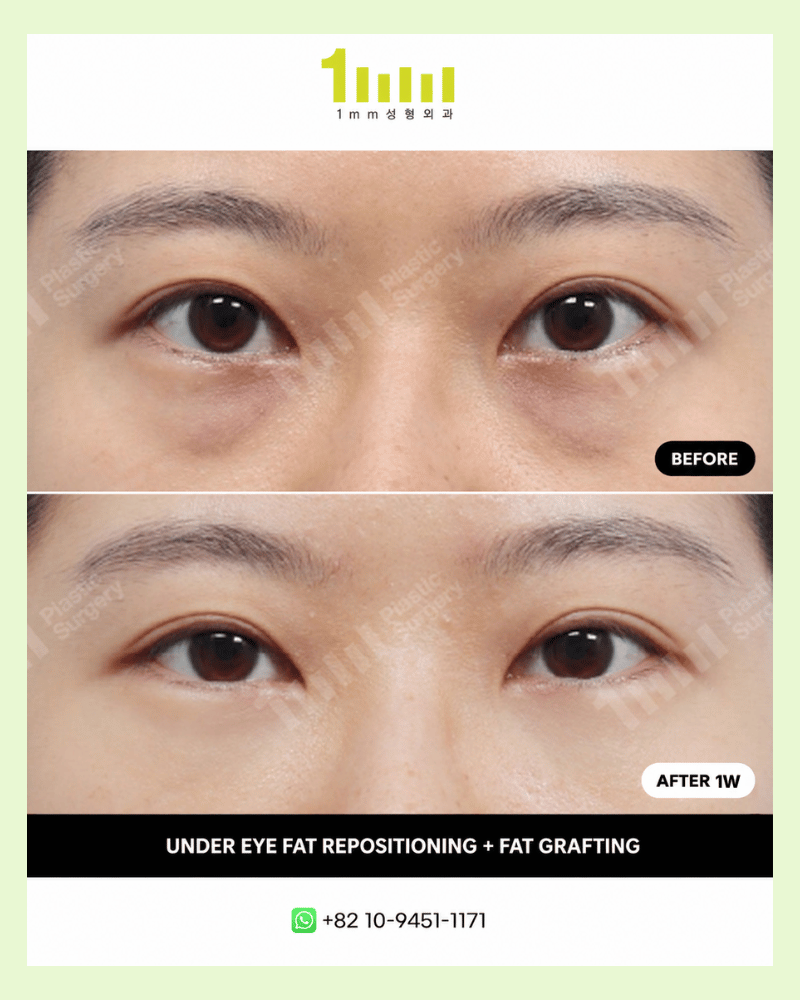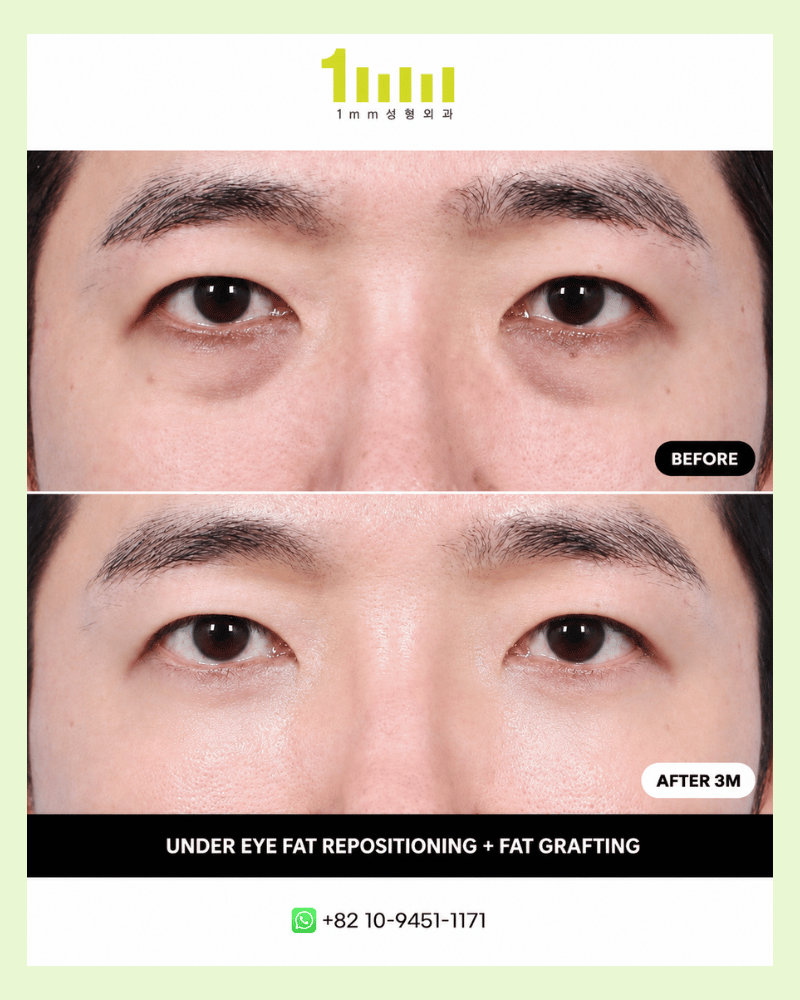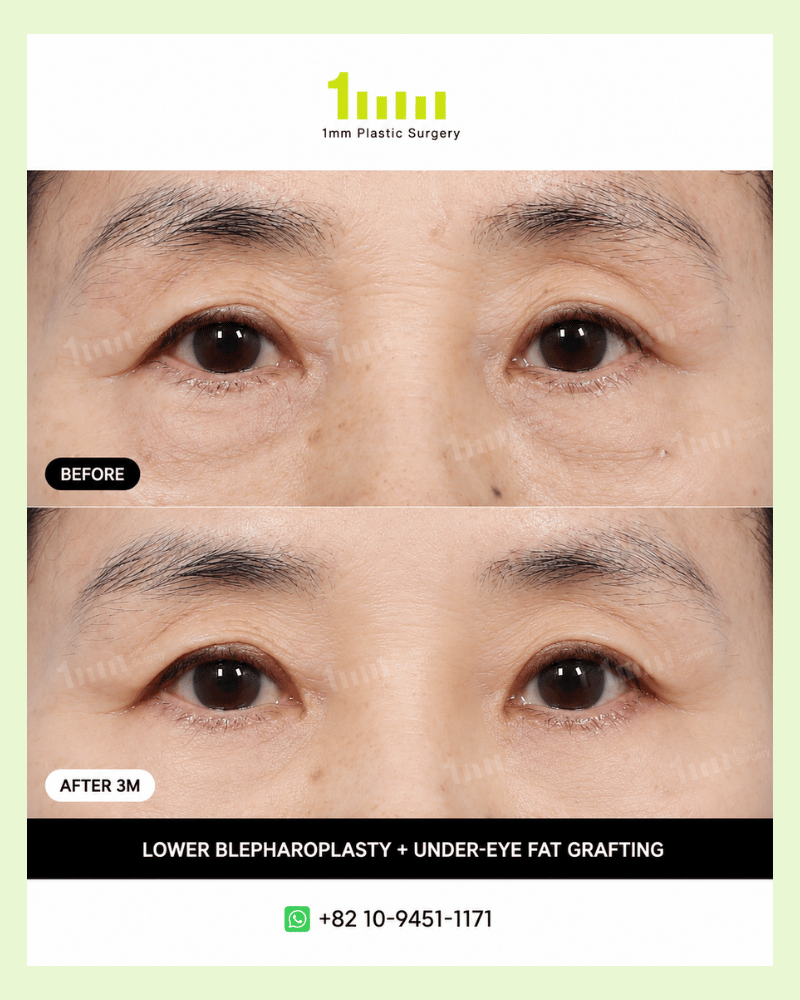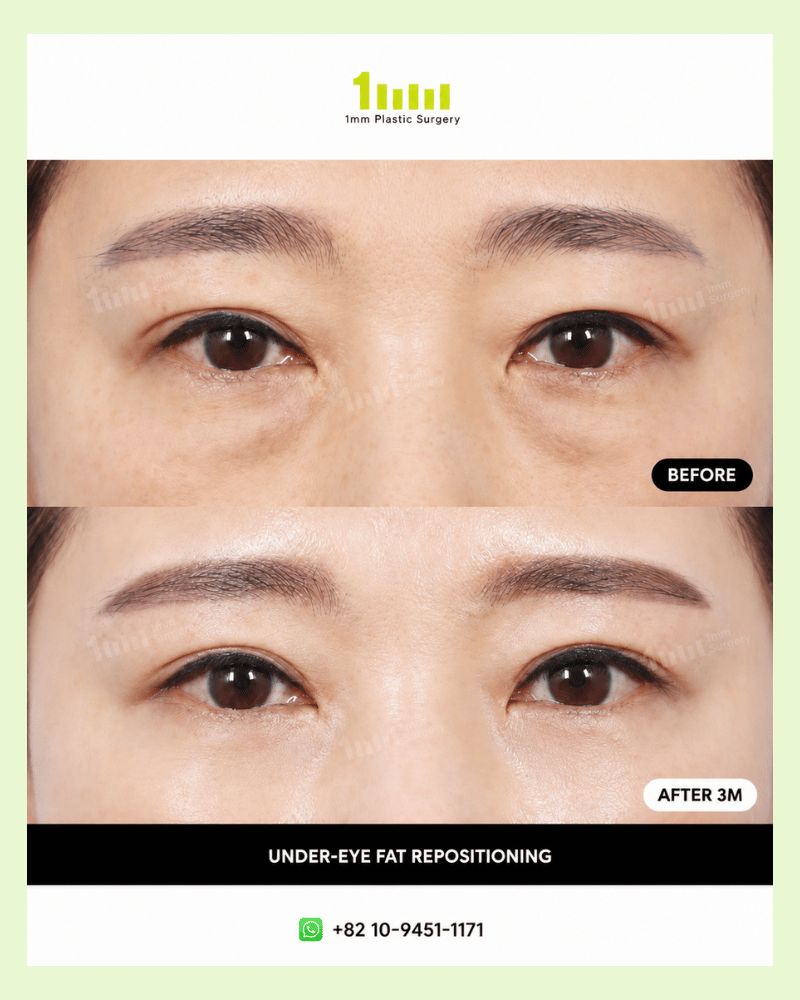
Revision Before and After Cases
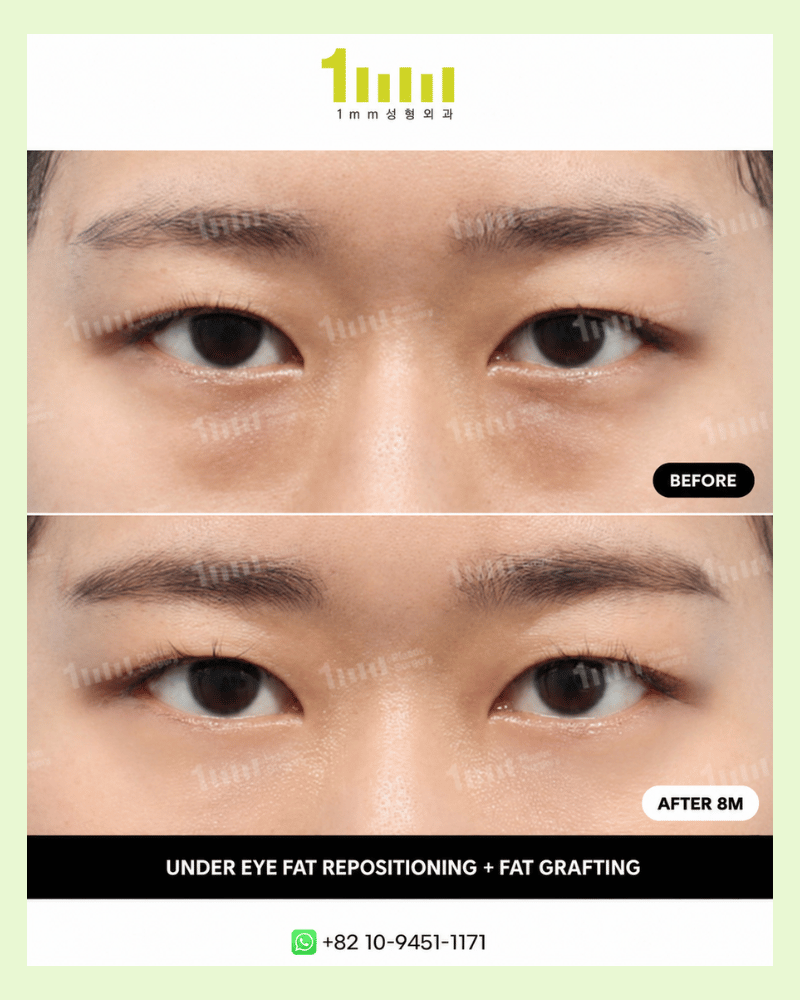
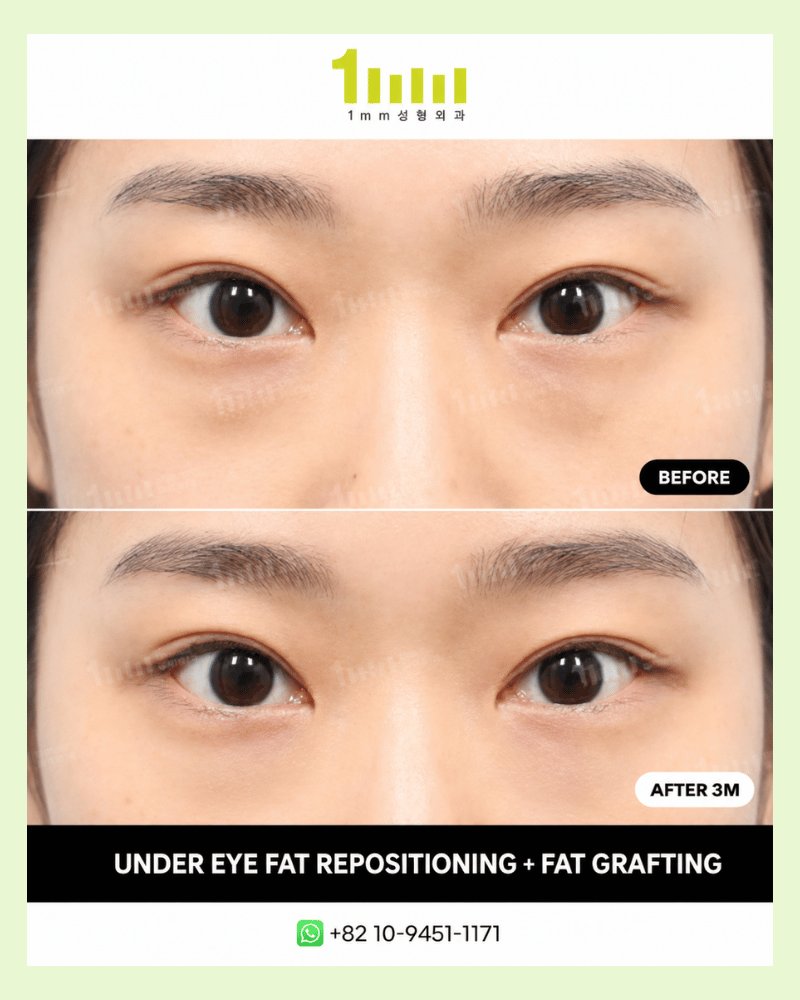
Clinical before-and-after case analyses illustrate how specialized revision blepharoplasty resolves structural failure, functional limitations, and visible scarring. By evaluating the root cause of primary surgical issues, revision specialists reconstruct natural eyelid contours, restore muscle movement, and establish symmetrical fold proportions.
Case 1: High Fold / "Sausage Crease" Lowering
- Baseline Pre-Op Condition: Excessively high crease anchor height combined with puffy, unnatural tissue folding above the tarsal plate. Deep scar adhesions restrict natural skin movement, giving the eyes a perpetual fixed or startled expression.
- Surgical Strategy: Incisional revision to release deep scar adhesions beneath the primary fold line. The old scar tissue is meticulously dissected, local orbital fat pads are redraped downward as a protective barrier to prevent re-adhesion, and a new primary crease is anchored at a lower, natural height.
- Post-Op Outcome: Smooth, lowered crease line with soft tissue transition, allowing normal eyelid movement without unnatural puffiness.
Case 2: Severe Crease Asymmetry & Unilateral Ptosis
- Baseline Pre-Op Condition: Mismatched crease heights between eyes, accompanied by uncorrected muscle weakness (ptosis) in one eyelid. The affected eye opens less fully, making the pupil appear partially covered and creating a sleepy, uneven gaze.
- Surgical Strategy: Levator muscle advancement (ptosis correction) on the weaker eye to equalize pupil exposure. Symmetrical crease lines are redesigned based on facial bone structure, adjusting both fold heights while the patient sits upright during local anesthesia to verify dynamic eye opening.
- Post-Op Outcome: Equalized pupil exposure, balanced crease flow, and restored functional eyelid elevation.
Case 3: Multiple Creases & Deep Scar Adhesions
- Baseline Pre-Op Condition: Irregular, overlapping triple folds caused by multiple scar attachment points from a prior procedure. Skin folds randomly upon blinking, accompanied by indented scar grooves along the upper eyelid.
- Surgical Strategy: Complete release of all secondary scar attachments under high magnification. Micro-fat grafting or fascial tissue redraping is placed underneath the old incision line, establishing a smooth cushion so only a single primary fold operates.
- Post-Op Outcome: Elimination of secondary skin drapes, yielding a clean, single-fold crease and a smooth surface contour.
Case 4: Hollow Upper Lids with Loose Crease
- Baseline Pre-Op Condition: Sunken upper eye socket resulting from over-removal of orbital fat during primary surgery. The lack of soft tissue volume causes the primary double eyelid fold to unbind, unravel, or appear faint.
- Surgical Strategy: Micro-fat grafting to restore volume in the orbital socket, combined with re-anchoring the primary crease line to the tarsal plate. Restoring volume restores natural skin drape and structural support for the crease.
- Post-Op Outcome: Soft, youthful upper lid fullness with a crisp, stable double eyelid fold.
Estimated Cost Range for Revision in Korea
Surgical fees reflect case complexity, scar tissue volume, and whether muscle repair or fat grafting is required:
- Standard Crease Revision (Asymmetry / Height Adjustment): $3,500 – $5,500 USD
- Revision Ptosis Correction (Muscle Repair): $3,800 – $7,000 USD
- Complex High Fold / "Sausage Crease" Lowering: $4,800 – $8,500 USD
- Severe Reconstruction (Multi-Fold / Major Scar Release): $5,000 – $10,000+ USD
Why Before-and-After Analysis Matters in Korea
- Cause-Based Diagnostic Planning: Specialists in Seoul focus on diagnosing internal mechanics (muscle tension, scar tissue depth, volume loss) rather than making surface-level changes.
- Intraoperative Seated Verification: Dynamic height checks during local anesthesia allow real-time adjustments while you sit upright, ensuring balanced pupil exposure and crease flow before finalizing sutures.
- Integrated Scar & Recovery Care: Premier clinics provide post-operative high-density LED light therapy, scar management treatments, and dedicated English medical coordinators for seamless international care.
Final Thoughts
Analyzing real revision cases demonstrates that successful outcomes depend on correcting underlying anatomical structures, releasing internal scar tissue, and restoring volume where needed. Partnering with a sub-specialized revision expert in South Korea ensures a precise, tailored treatment plan designed to restore both long-term functional comfort and natural aesthetic balance.
You might also like